
A Non-VoIP number is a phone number that is not classified as a VoIP line. For SMS verification, the term usually refers to carrier/mobile-style numbers rather than internet-based VoIP numbers. These numbers may be accepted in verification flows where VoIP numbers are restricted, although acceptance always depends on the individual service.
What does Non-VoIP mean?
Non-VoIP describes line classification: the number is treated as something other than a Voice over IP (internet phone) identity. Telecom lookup systems often separate line types such as mobile, landline, fixed VoIP, and non-fixed VoIP. In verification contexts, “Non-VoIP” usually means the number is classified as a non-VoIP line rather than a fixed or non-fixed VoIP number.
That classification is what many websites and apps check when they ask for a phone number during signup. It does not by itself mean the number is your personal mobile SIM.
NonVoip focuses on Non-VoIP-style inventory for online SMS verification—not on replacing your personal phone for everyday calling.
How does a Non-VoIP number work?
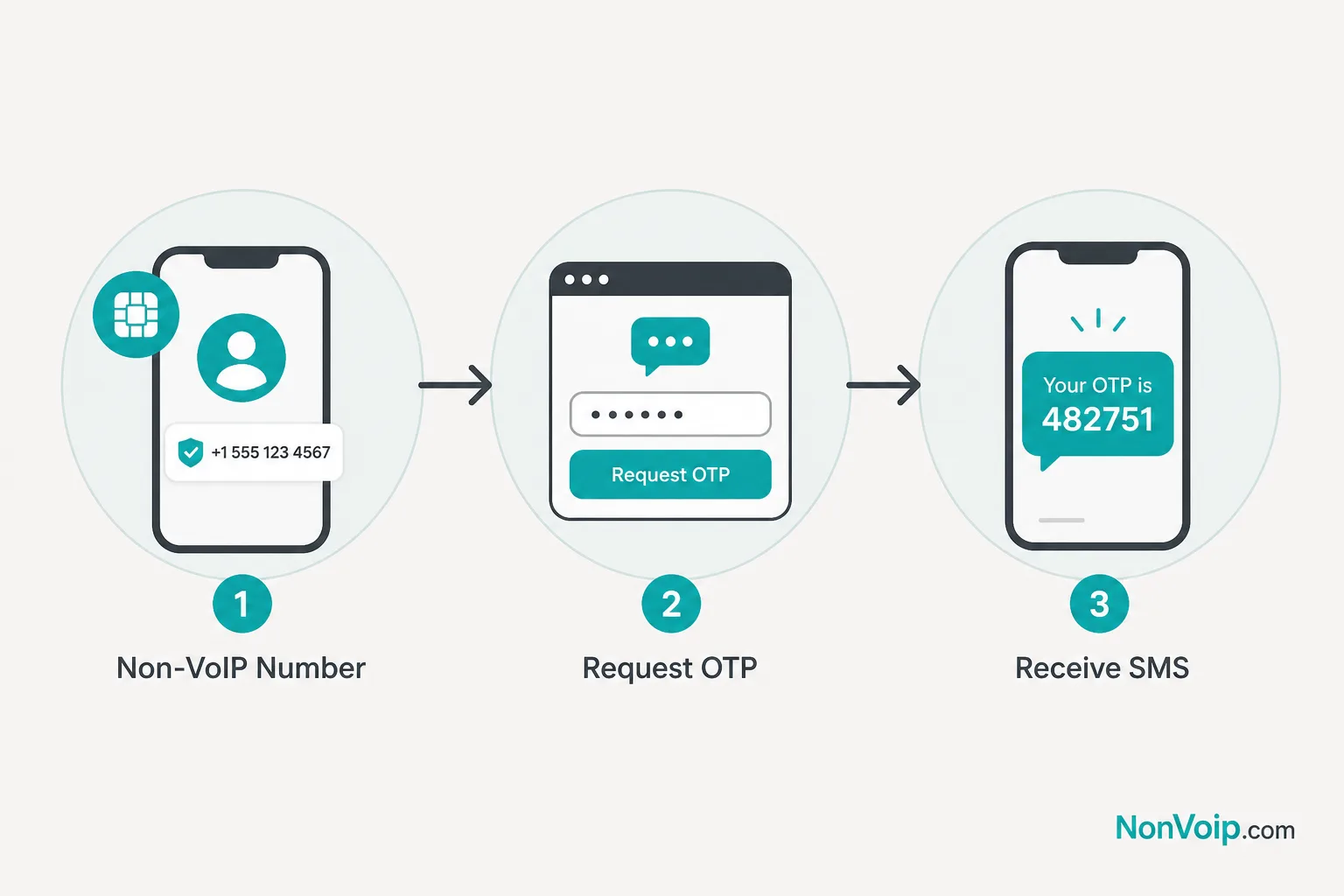
At a high level, a Non-VoIP number for SMS verification works like this:
- You choose a product type (short term, long term, or dedicated) and a service or region that matches your use case.
- You receive a phone number to enter on the website or app that is sending the verification SMS.
- The provider delivers the inbound SMS (including the OTP) to your NonVoip order, where you can read it in the dashboard.
You do not need a separate softphone app to read those messages on NonVoip. The important part for verification is inbound SMS delivery to the assigned number during the rental or session window.
For a full product walkthrough, see How NonVoip works. To browse live services and pricing, open the SMS verification catalog.
How are Non-VoIP and VoIP numbers different?
The practical difference is how platforms classify the line:
| Non-VoIP number | VoIP number | |
|---|---|---|
| Typical classification | Not classified as a VoIP line | Internet / data-based telephony |
| Common verification outcome | May pass where VoIP is restricted | Often rejected or limited |
| What it does not mean | Automatically a personal mobile SIM | Always unusable for every service |
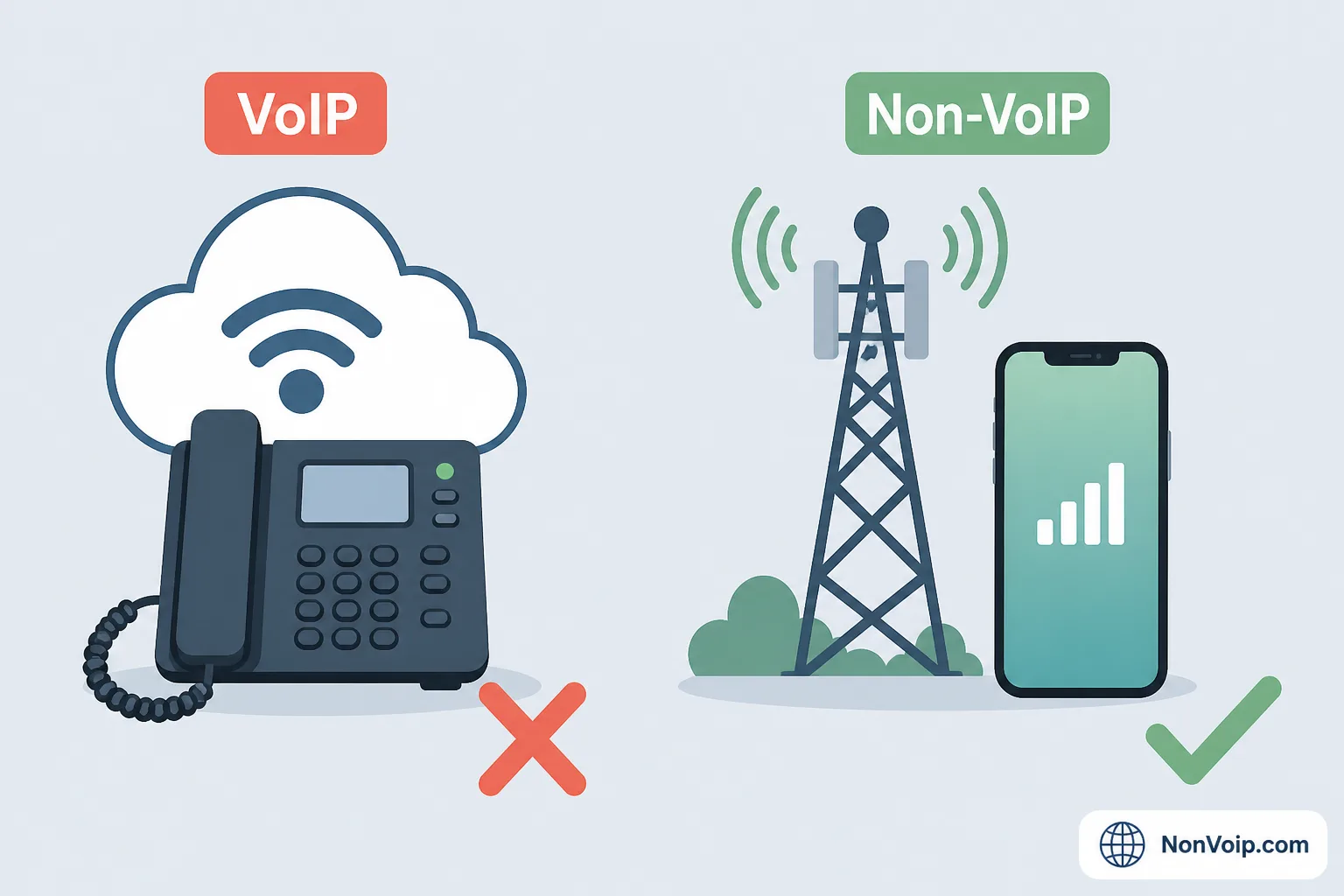
People often ask whether an internet (VoIP) line will work for signup. Many verification systems treat VoIP-classified numbers more strictly. Non-VoIP inventory is aimed at flows that prefer a non-VoIP classification—but each destination service still makes its own decision.
For more context, read Why are Non-VoIP numbers used for SMS verification?.
Why are Non-VoIP numbers used for SMS verification?
SMS verification confirms that someone can receive a message on a reachable phone number. Platforms send an OTP and ask you to enter it. Number-type checks are one of several signals services may use.
Some services restrict numbers they classify as VoIP or virtual. A Non-VoIP classification may avoid those specific restrictions, but the service still decides whether a number is accepted and whether a verification message is sent.
Acceptance can also vary by country, number history, and other risk checks. Related reading: What is a carrier-based phone number?, Why do some services reject VoIP numbers?, and What is SMS verification and how does it work?.
What does a Non-VoIP number not guarantee?
A Non-VoIP label is useful context—not a promise. In particular:
- It does not guarantee acceptance by every website or app.
- It does not guarantee instant SMS delivery.
- Acceptance can depend on the service, country, number history, and other checks.
- Always follow the destination service’s own verification rules.
If a number is rejected or a code does not arrive, start with Why is my phone number not accepted for verification? or SMS code not received.
When is a Non-VoIP number useful?
A Non-VoIP number can be useful when you want to:
- Complete online SMS verification without using your personal phone
- Avoid sharing your personal phone number for every verification request
- Receive an OTP for a one-time signup or a short session
- Keep a stable line for repeat SMS over a rental period
Match the access period to your need with NonVoip’s number types (overview below), then see Understanding NonVoip number types for detail.
How do NonVoip number types work?
NonVoip offers three product shapes:
- Short term — short session for one-time OTP-style use
- Long term — longer rental when you need the same line across multiple messages
- Dedicated — keep access to a dedicated number for a longer period, subject to current availability
Live countries, carriers, and pricing appear in the SMS verification catalog and on Pricing. For dedicated inventory by region, see Dedicated numbers.
How do you get started on NonVoip?
- Create an account and add wallet balance.
- Pick short term, long term, or dedicated based on how long you need the number.
- Choose a service or region from the catalog and place an order.
- Enter the number where the OTP is requested, then read the SMS in your NonVoip order.
Full onboarding detail lives in How NonVoip works. When you are ready to pick a service, go to SMS verification.
Frequently asked questions
Is a Non-VoIP number the same as a real mobile number?
Not necessarily. Non-VoIP describes the number’s line classification; it does not by itself guarantee that the number is a personal mobile SIM.
Does a Non-VoIP number guarantee SMS verification?
No. A Non-VoIP classification may help with services that restrict VoIP numbers, but acceptance and message delivery still depend on the destination service and other checks.
Can a Non-VoIP number receive OTP codes?
Yes—when the destination service accepts the number and sends an SMS, inbound OTP messages can be delivered to your NonVoip order during the active session or rental window.
Can the same Non-VoIP number receive more than one SMS?
It depends on the product type and rental window. Short-term sessions are typically aimed at one-time use; longer rentals and dedicated numbers are designed for ongoing inbound SMS. See Can a number receive multiple verification SMS?.
Next step: Browse SMS verification services for live offers, or continue with How NonVoip works to walk through your first order.