
Many websites and apps are more willing to send verification codes to numbers they recognize as standard mobile or carrier-based lines. That is one reason Non-VoIP numbers are commonly used for SMS verification.
Non-VoIP numbers sit closer to traditional telephony-style routing than pure internet (VoIP) identities, so they often fit those checks better. This guide explains why number type matters for SMS verification. If you are new to the topic, start with What is a Non-VoIP number? or What is SMS verification?.
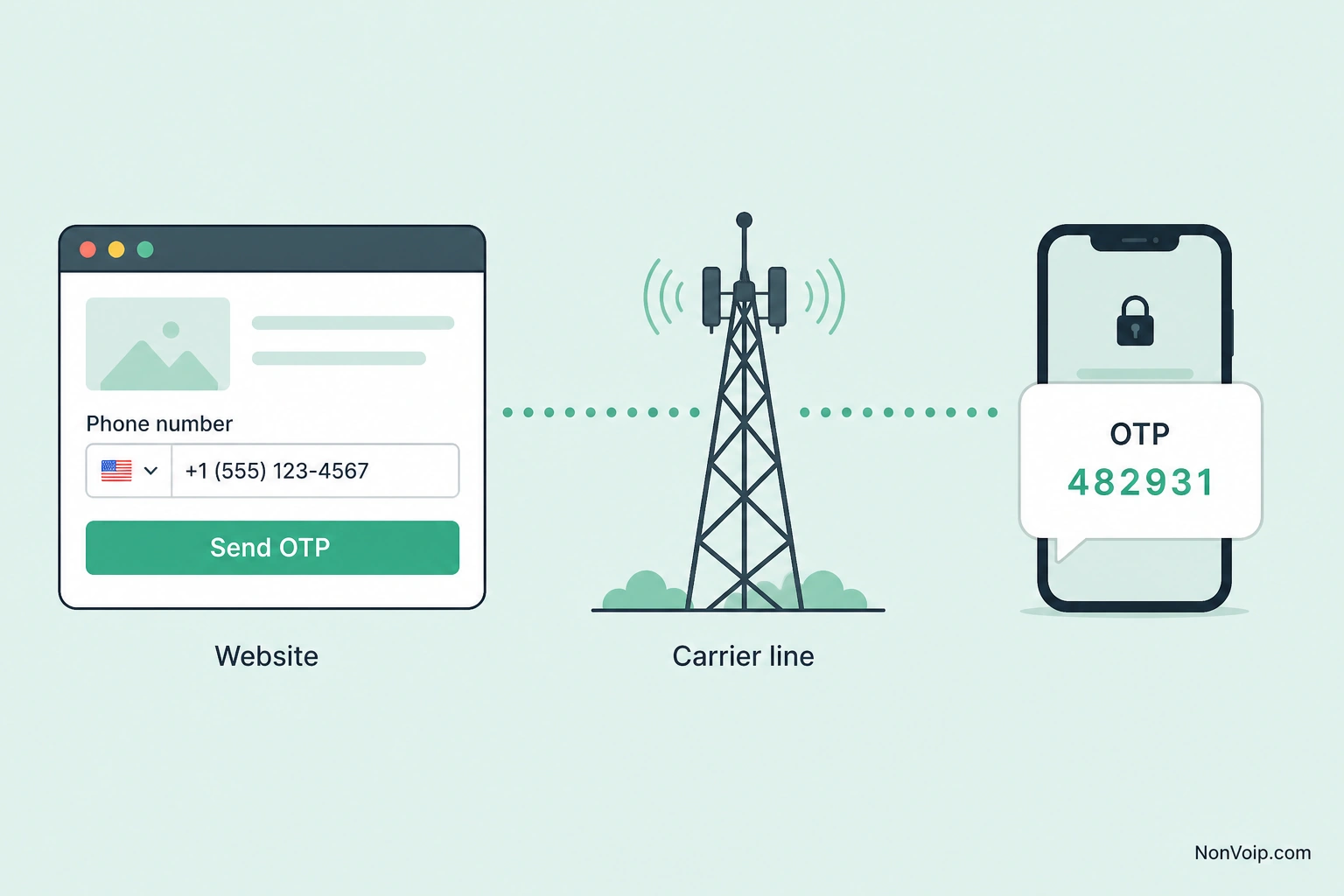
Why do verification systems care about number type?
SMS verification asks you to prove you control a reachable phone number. Platforms send an OTP and watch for successful entry. To reduce abuse, many services classify numbers and restrict lines they treat as VoIP, virtual, or disposable.
A Non-VoIP number is intended to sit closer to what those systems call a standard mobile path—so the form is more likely to accept the number and send the SMS.
How can number type affect SMS verification?
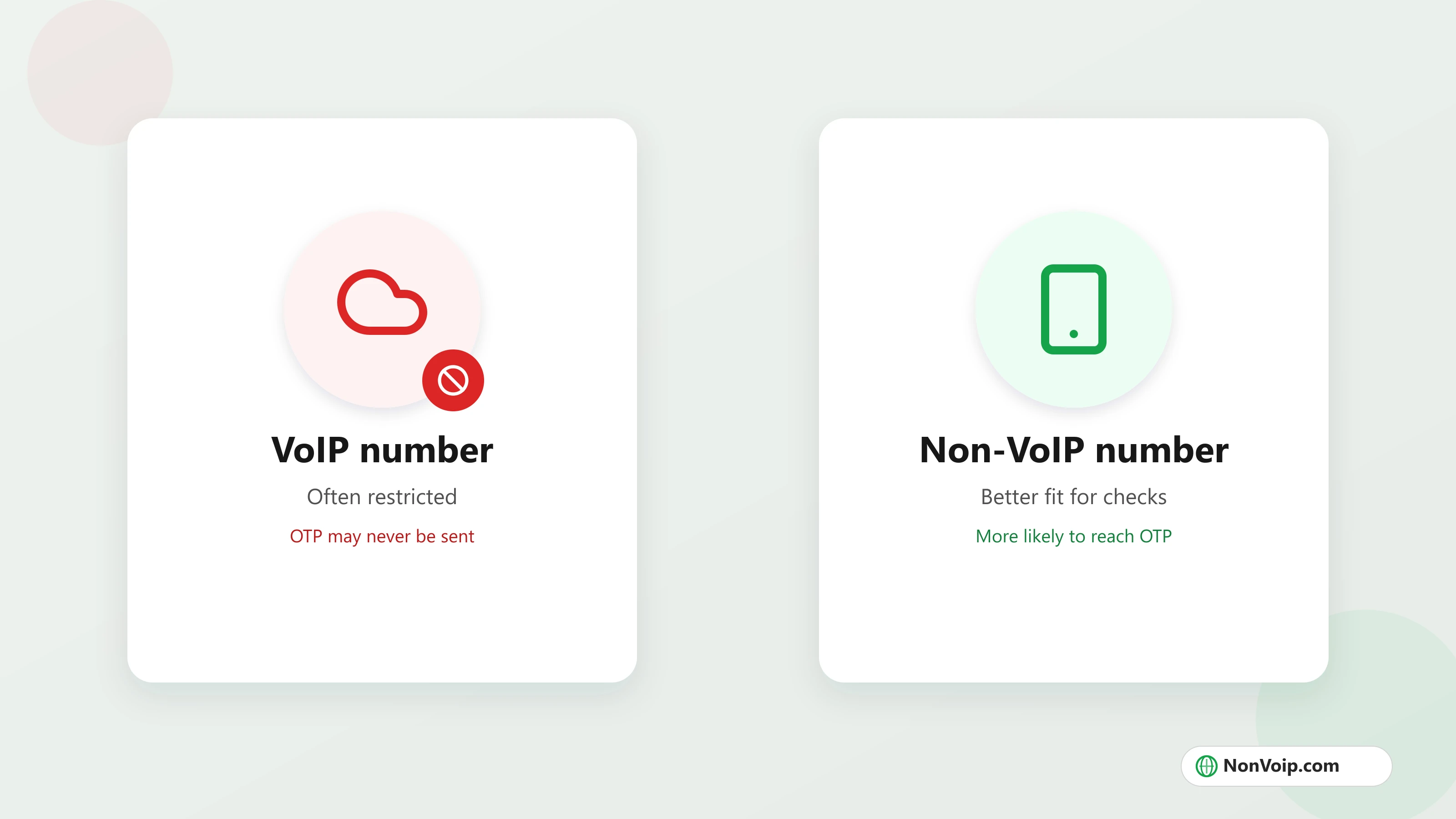
The first step is getting the number accepted. If a service classifies a number as unsupported VoIP or virtual inventory, it may reject the number before an SMS is ever sent. A compatible Non-VoIP number can therefore improve the chance of reaching the OTP-delivery stage.
If the form rejects the number, see Why is my phone number not accepted for verification?. After a number is accepted, the destination still has to send the code—What happens after you request an SMS verification code?. If the code never appears, see SMS verification code not received.
What are the main benefits of using a Non-VoIP number?
From the user’s side, a Non-VoIP number can help in four ways:
- Better fit for mobile-number verification checks — many sites look for a standard mobile or carrier-style line, not a VoIP identity.
- Fewer VoIP-restriction issues — Non-VoIP inventory is intended for verification use cases where VoIP-classified numbers may face restrictions.
- Keeps your primary number separate — you can complete online verification without sharing your personal mobile with every website or app.
- Choose the access that fits your needs — use Short Term for quick verification, or keep a number longer with Long Term or Dedicated access.
Why use a Non-VoIP number instead of your personal number?
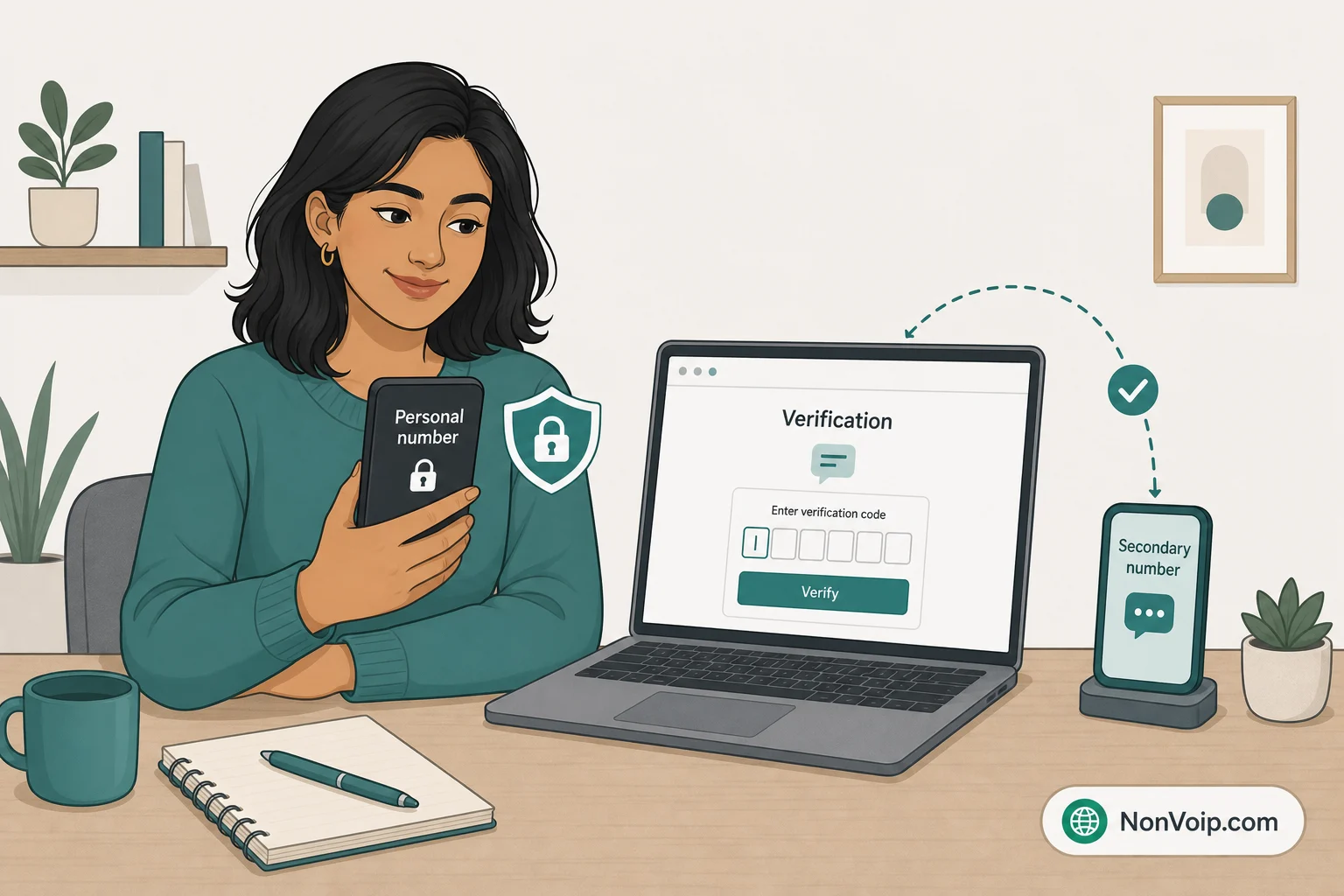
A separate Non-VoIP number can also help you avoid sharing your primary phone number with every website or app you use.
It can act as a secondary number for online services and SMS verification, while your personal number stays reserved for calls, messages, and important accounts.
For more on privacy and using a secondary number, see Why use a separate number for SMS verification?.
Why do some services restrict VoIP numbers?
Some services treat VoIP and other virtual lines as higher-risk for signup and OTP checks, so they limit or reject those number types. Rules vary by site, country, and risk policy.
For a deeper explanation, read Why do some services reject VoIP numbers?. Non-VoIP inventory on NonVoip is chosen for SMS verification use cases—not because every destination publishes identical rules. Acceptance still varies by country, product, and risk checks.
Which NonVoip number type should you use?
NonVoip offers Short Term, Long Term, and Dedicated options. The main differences are how long you keep the number and how you plan to use it:
- Short Term — one-time or quick verification
- Long Term — the same number for longer (30-day) access
- Dedicated — a private number for broader ongoing use
Compare all options in Understanding NonVoip number types. When you’re ready, browse SMS verification or Dedicated numbers.
Frequently Asked Questions
Is a Non-VoIP number guaranteed to work for verification?
No. The destination service decides. Non-VoIP improves fit for mobile-style checks; it does not override every filter.
Why might a website reject a VoIP number?
Risk systems often classify VoIP and virtual inventory as easier to abuse than everyday mobile-style lines. Full explanation: Why do some services reject VoIP numbers?.
Can I use a Non-VoIP number instead of my personal number?
Yes, where the destination accepts that number. A separate Non-VoIP line can keep verification traffic off your primary mobile. See Why use a separate number for SMS verification?.
Are Non-VoIP numbers real carrier numbers?
Non-VoIP refers to the type or classification of the phone line rather than a pure internet-based VoIP number. It does not necessarily mean the number is a personal SIM card issued directly to you. Carrier, country, and availability depend on the number offered. See What is a Non-VoIP number? and What is a carrier-based phone number?.
Which number type should I choose for SMS verification?
Use Short Term for a one-time or quick OTP. Use Long Term when you need the same number for a 30-day rental. Use Dedicated for a private 30-day line by country (and carrier, where listed). Compare types in Understanding NonVoip number types.
Is this the same as “temporary number” marketing?
“Temporary” is informal language. On NonVoip, access length is defined by product type (session vs rental). See What is a temporary phone number?.
Ready to use a Non-VoIP number?
Browse available numbers for SMS verification, or compare Short Term, Long Term, and Dedicated options to choose the access that fits your needs.