
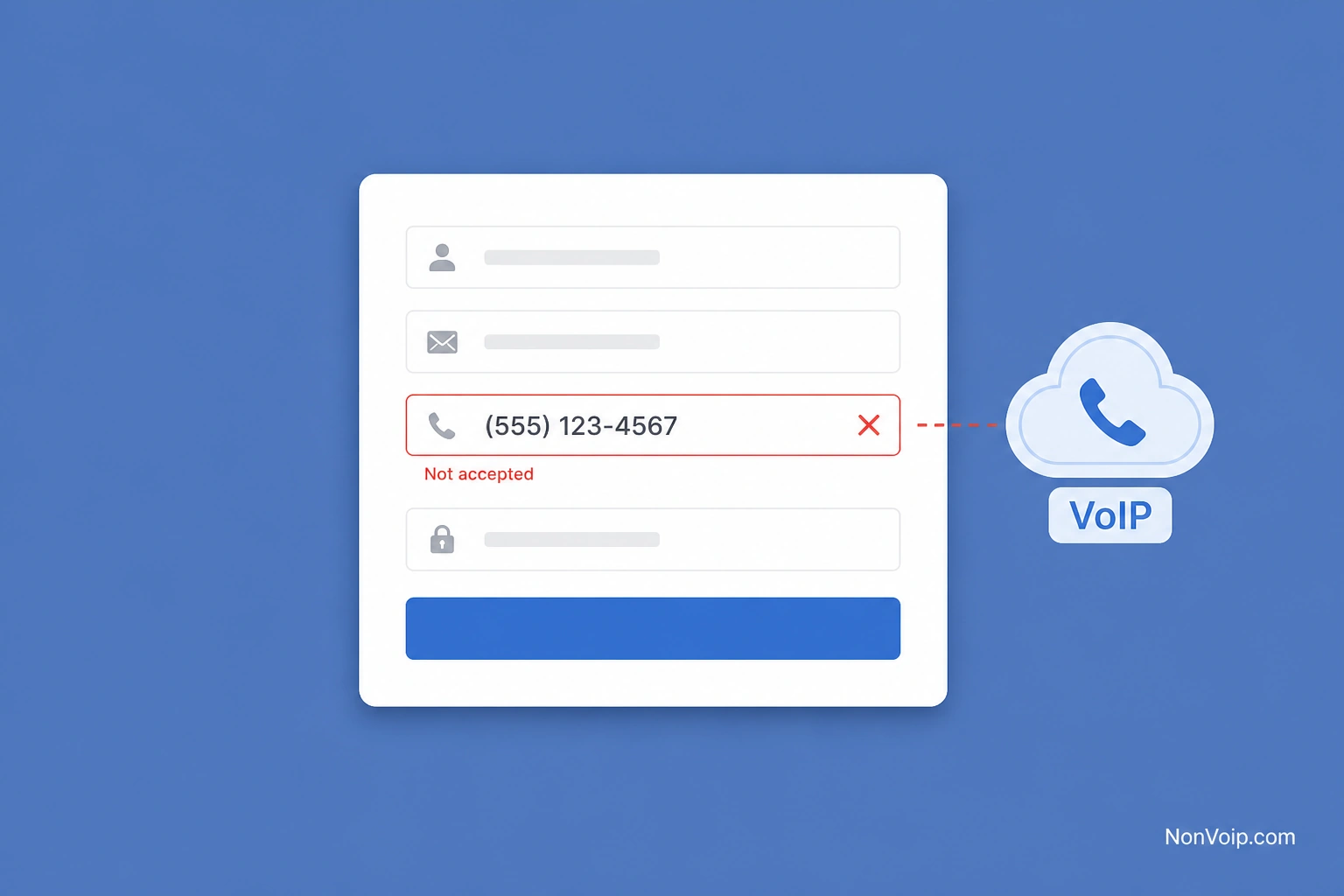
Many websites and apps reject VoIP numbers during signup or SMS verification because their risk systems treat internet-based phone identities as easier to abuse than traditional mobile-style lines.
This guide explains the rejection / policy angle. For why people choose Non-VoIP inventory for verification, see Why are Non-VoIP numbers used for SMS verification?—related topic, different intent.
What is a VoIP number in this context?
VoIP (Voice over IP) numbers are associated with internet telephony—calls and messages over data rather than classic carrier mobile routing. Platforms often classify them as virtual, internet, or non-mobile.
Carrier-style framing: What is a carrier-based phone number?. NonVoip product meaning: What is a Non-VoIP number?.
Why do services block VoIP for verification?
Common reasons risk teams cite:
- VoIP lines can be provisioned quickly in bulk
- Disposable identities weaken “prove you control a phone” checks
- Fraud and multi-account patterns historically cluster on cheap virtual numbers
- Product policy may require a mobile-classified number for SMS OTP
SMS verification still needs a reachable channel—see What is SMS verification?—but destinations set their own acceptance rules.
What does rejection look like?
You may see:
- “Please enter a valid mobile number”
- Immediate form error before any SMS is sent
- Silent failure where the send button never confirms
If the number is rejected in the form, use Why is my phone number not accepted for verification?. That checklist is for the user-facing failure; this article is about why VoIP is filtered.
Does rejecting VoIP mean Non-VoIP always works?
No. Non-VoIP / carrier-based inventory is aimed at the category many filters allow, but each service still applies country, reputation, and risk checks. Non-VoIP is not a universal bypass.
Frequently Asked Questions
Can a VoIP number ever receive an OTP?
Some destinations allow it; many do not. NonVoip focuses on Non-VoIP-style numbers for verification use cases.
Is this the same as “code not received”?
No. Rejection usually happens before SMS delivery. Missing codes after acceptance: SMS code not received.
Next step: Read Why are Non-VoIP numbers used for SMS verification?, or try SMS verification.