
People use a separate number for SMS verification so signup and security codes are not tied to the personal mobile they use for everyday calls, banking apps, and contacts.
This guide explains the separate-number motivation. How to run the flow on NonVoip: How to receive SMS online with a Non-VoIP number.
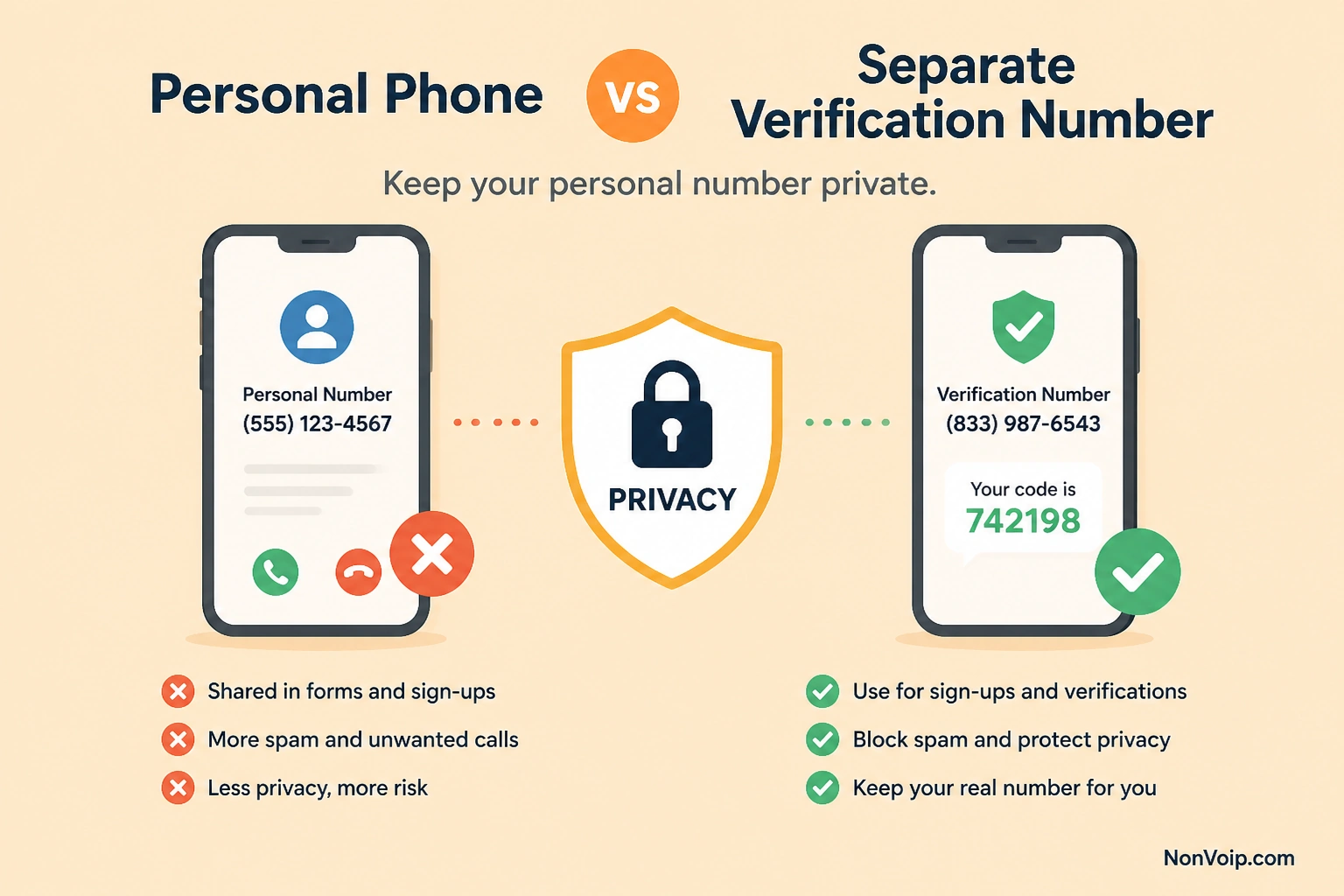
Why not always use a personal mobile?
Common reasons:
- Privacy — fewer services store your primary number
- Organization — verification SMS stay in one place (your NonVoip orders)
- Separation — work, testing, or secondary accounts stay off the personal SIM
- Control — choose access length via Short Term, Long Term, or Dedicated
Non-VoIP context: What is a Non-VoIP number?. Temporary access idea: What is a temporary phone number?.
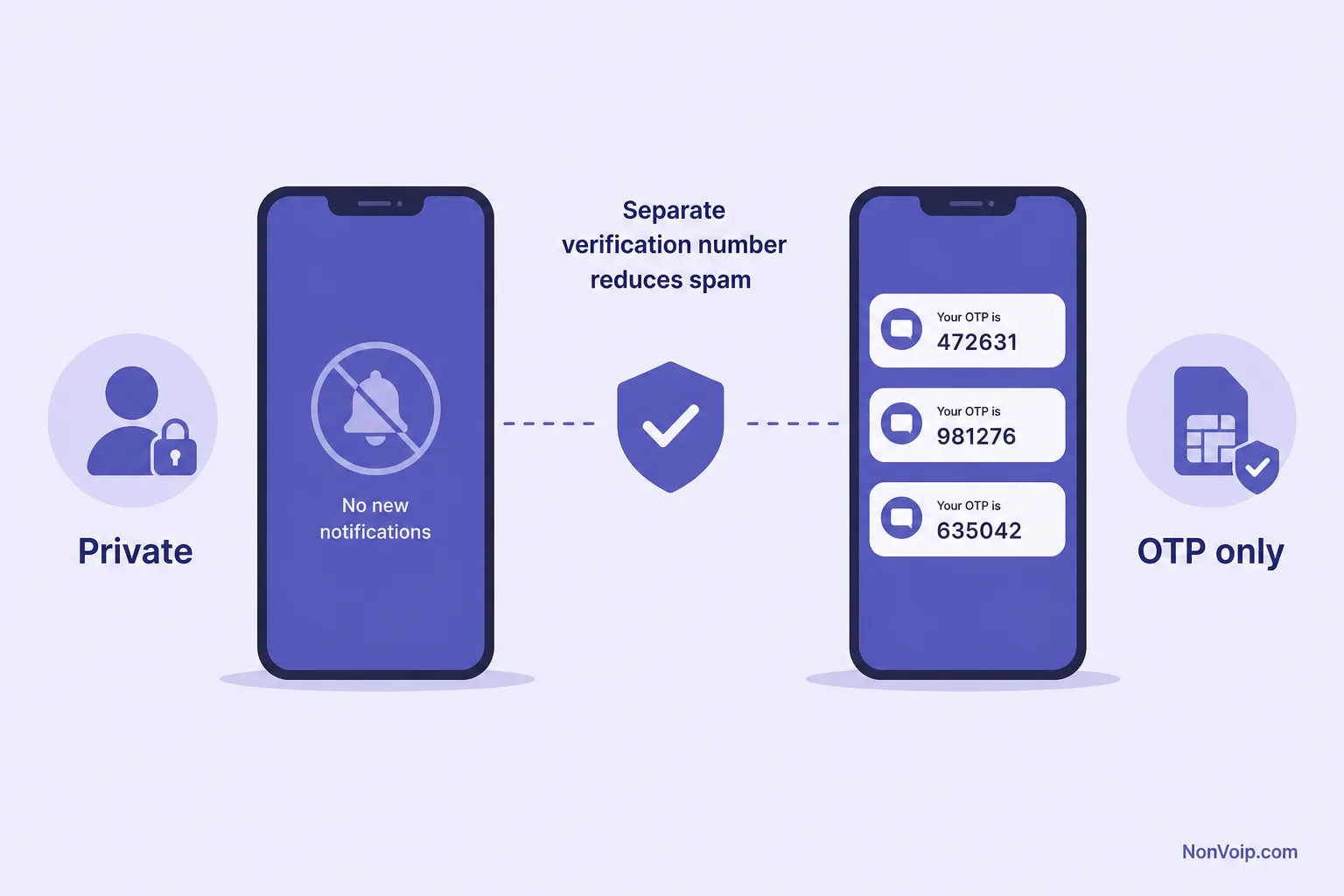
What problem does separation solve?
Many sites require phone verification to reduce abuse—see Why do websites ask for phone number verification?. That requirement does not mean every form must use the same personal line forever.
A separate Non-VoIP number lets you complete SMS checks when the destination accepts that number category, without mixing those messages into your personal inbox.
How NonVoip fits
- Order a Non-VoIP number for the access period you need.
- Enter it only where verification is required.
- Read OTPs in the NonVoip dashboard.
Types: Understanding NonVoip number types. Why Non-VoIP for SMS filters: Why are Non-VoIP numbers used for SMS verification?.
What it does not do
- It does not remove a website’s verification requirement
- It does not guarantee every site accepts every number
- It is not a refund or billing guide
If a form rejects the number: Number not accepted.
Frequently Asked Questions
Is a separate number only for one-time signups?
No. Rentals can receive multiple SMS over time—Can a phone number receive more than one verification SMS?.
Is this about hiding identity from law enforcement?
No. This article is about everyday privacy and inbox separation for normal verification flows.
Next step: Continue with How NonVoip works, or open SMS verification.