
Websites ask for phone number verification to confirm that you control a reachable phone channel—usually by sending an SMS code you must enter before an account action completes.
This guide covers why platforms ask. For how the SMS OTP mechanism works, see What is SMS verification and how does it work?.
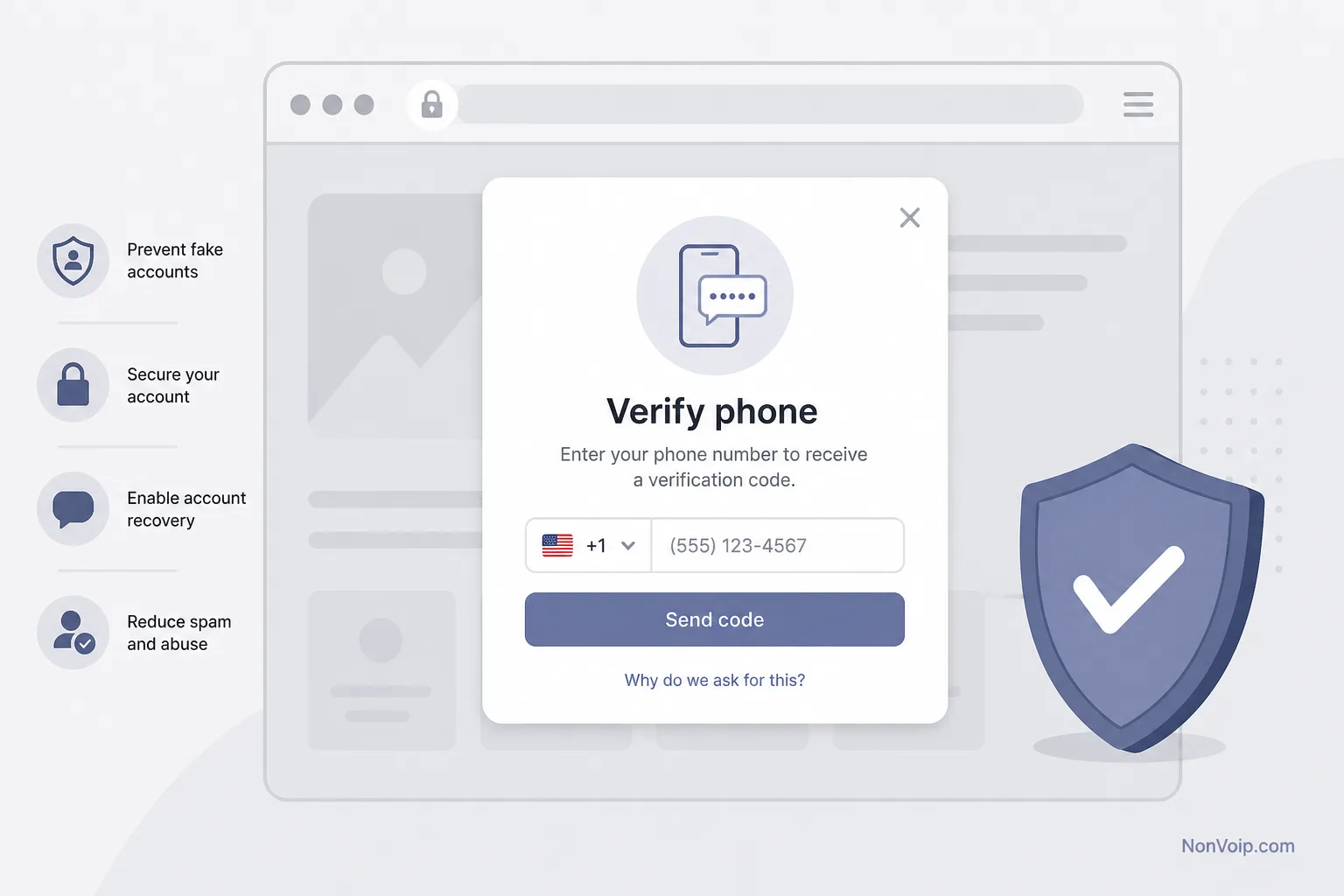
What are platforms trying to achieve?
Common goals:
- Prove possession of a phone number at signup or login
- Reduce automated account creation that only needs an email
- Support recovery when password reset uses SMS
- Add a step beyond password-only access for some flows
Phone verification is a product and security choice, not a universal law. Each site decides when to require it.
Why SMS instead of only email?
Email is easy to create in bulk. Phone numbers—especially carrier-based / mobile-classified lines—are treated as a stronger possession signal for many risk models. That is also why some services reject VoIP numbers.
When does phone verification usually appear?
- Creating a new account
- Enabling two-factor authentication
- Changing sensitive settings
- Recovering access
- Confirming a new device
The code you enter is typically an OTP. Delivery after you request it: What happens after you request an SMS verification code?.
Why do people use a separate number?
Some users prefer not to put a personal mobile on every form—privacy, organization, or keeping verification traffic separate. See Why use a separate number for SMS verification? and NonVoip’s How to receive SMS online.
Frequently Asked Questions
Is phone verification the same as identity KYC?
Not always. Many sites only check that you can receive an SMS. Full identity checks are a different process.
Can I skip phone verification?
Only if the destination allows another method. NonVoip does not remove a site’s requirement—it helps you complete SMS when a Non-VoIP number is accepted.
Next step: Continue with What is SMS verification?, or browse SMS verification.